the larger context of this major topic is in the linked parent note
see the outline guide for info on assigning / segmenting data for this note
this note is to cover/connect notes related to the major ( or otherwise) models of misophonia. this includes etiological models as well as mechanistic models.
Tldr
Kumar Motor Mirroring Model
Misophonia stems from overactive motor mirroring, not faulty hearing
The brain over-simulates other people’s actions, which triggers emotional and bodily stress responses
Trigger sounds strongly activate the anterior insula, driving autonomic arousal
Key upstream issue is motor system hyperactivation, especially orofacial motor cortex
Evidence pattern:
Auditory cortex responses are normal
Motor regions are hyperactive
Sensory–motor connectivity is elevated at rest
Fits perception–action theory: observing actions recruits the observer’s motor system
In there 2025 literature review Savard & Coffey describe three big models of Misophonia. they these models of misophonia are complementary rather than mutually exclusive, each emphasizing different aspects of cognition, neural mechanisms, and etiology, while none alone accounts for the full range of phenomenological, behavioral, and cognitive findings. (Jastreboff & Jastreboff, 2023) conceptualize misophonia as distinct from hyperacusis, proposing normal auditory processing alongside abnormal conditioned connections between the auditory system and limbic and autonomic networks, shaped by factors such as personal relationships and perceived control. Aryal & Prabhu, 2023 similarly posit intact peripheral and subcortical auditory processing but emphasize hyperactive non-classical pathways and impaired sensory gating that promote maladaptive auditory–emotional associations via conditioning. In contrast, Berger et al., 2024 focus on social cognition and sensorimotor integration, suggesting that heightened auditory–motor coupling and predictive coding mechanisms amplify signals to the insula, amygdala, and autonomic system, producing intense emotional and physiological responses.
Kumar model: hyper motor mirroring/social cognition model
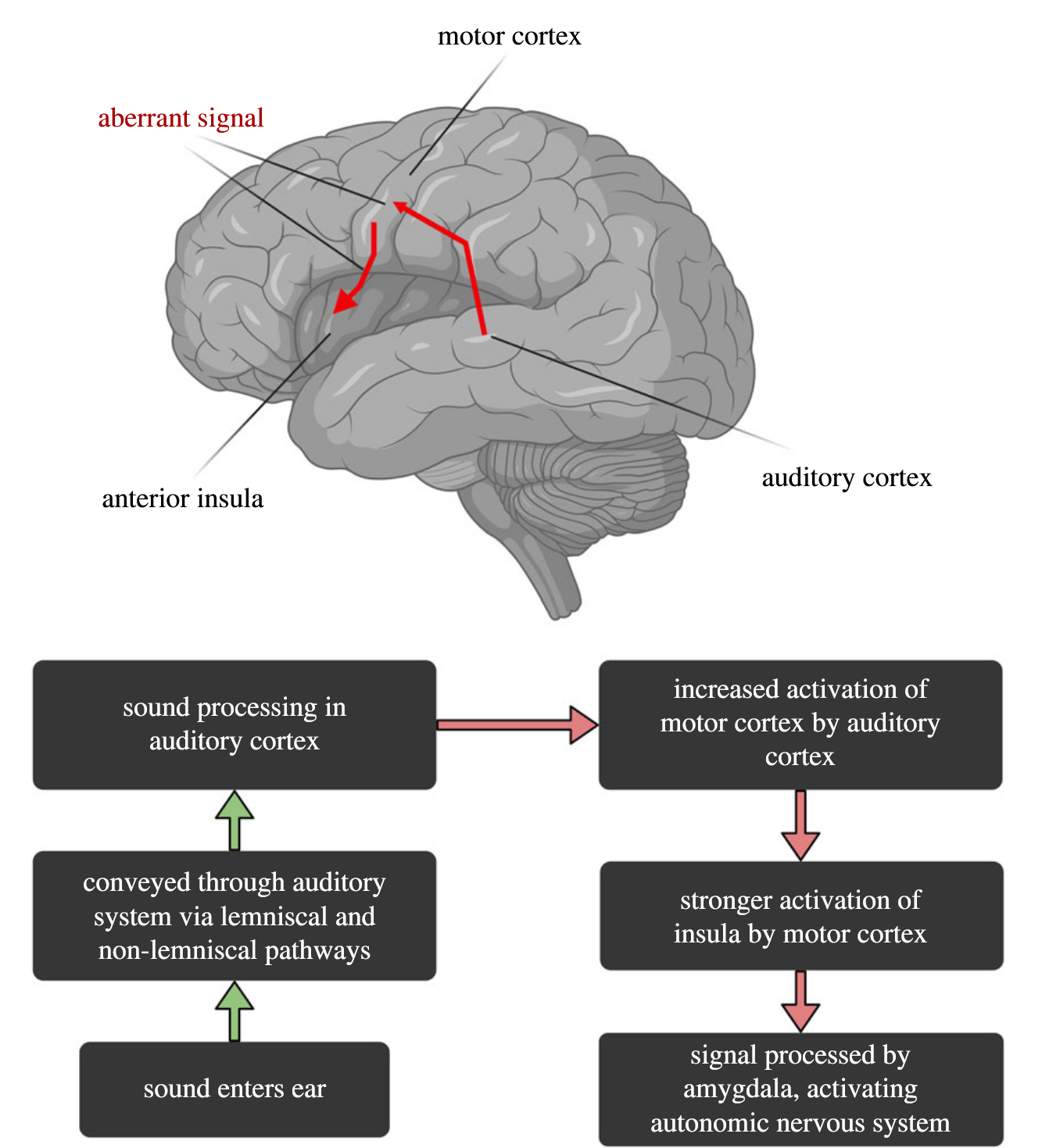
Core mechanism-: Misophonic response is the result of aberrant motor simulation which drives emotional/physiological reactivity via the salience network. it is not the result of abnormal auditory systems.
Integrated model-: Misophonia is not simply “hatred of sound,” but distressing over-simulation of others’ actions.
Upstream mechanism-: The “hyper-mirroring hypothesis” shifts focus from auditory deficits to motor system overactivation, especially in the orofacial motor cortex (vPMC).
Supporting findings-:
Normal auditory cortex responses
Hyperactivation of motor areas
Elevated resting-state connectivity between sensory and motor cortices
Framed within social cognition and perception-action links: perceiving another’s actions recruits motor representations in the observer.
Explains key misophonia features -:
Importance of source/context of sound- The hyper-mirroring account says misophonia arises from simulating another person’s actions. That means the perceived agent matters. A chewing sound from a stranger → brain interprets it as “someone else’s mouth moving,” triggering motor mirroring and distress. But the same acoustic sound from, say, an animal or recording may not trigger it, because there’s no human action to mirror.
Common use of behavioral mimicry as coping- Many Misophonics report that imitating the trigger (e.g., chewing, tapping) reduces distress. In the hyper-mirroring framework, this works because self-generated actions dampen mirroring of others , your motor system is already engaged with your own action, leaving less bandwidth to over-simulate the other person’s action.
textual overview/summary
The scientific understanding of misophonia has evolved from early sound-based theories to a sophisticated neurobiological framework centered on the abnormal attribution of salience to specific, human-generated sounds. Foundational neuroimaging studies consistently demonstrate that misophonic trigger sounds elicit hyperactivation of the anterior insular cortex (AIC), a key hub of the brain's salience network. This aberrant AIC activity directly mediates heightened autonomic arousal, such as increased heart rate and skin conductance (Kumar et al., 2017). Subsequent research has identified an upstream mechanism for this insular response, proposing a "hyper-mirroring" hypothesis that shifts the core deficit from the auditory to the motor system. This model is supported by evidence of normal auditory cortex activation alongside hyperactivation of the orofacial motor cortex (vPMC), as well as increased resting-state connectivity between sensory and motor cortices in affected individuals (Kumar et al., 2021).
This hyper-mirroring mechanism is best understood within the broader context of social cognition and the perception-action link, where perceiving another's action activates corresponding motor representations in the observer (Berger et al., 2024). This perspective effectively accounts for key phenomenological features of misophonia that are otherwise difficult to explain, such as the critical importance of the perceived source and context of a sound and the high prevalence of behavioral mimicry as a coping strategy. This aberrant motor activity, in turn, drives the profound emotional and physiological response via the salience network. This integrated model thus characterizes misophonia not as a hatred of sound, but as a distressing and excessive simulation of another's physical actions.
support
headerless
Kumar support focus
Ajmera et al. (2026) identified neural connectivity-based markers of misophonia using an optimized machine learning framework applied to resting-state fMRI data from subjects categorized into misophonia-only, misophonia-with-hyperacusis, and control groups. They found significant somatomotor network connectivity alterations in both misophonia groups, directly replicating Kumar et al.'s (2021) finding of motor network involvement in misophonia and converging across methodologies (Ajmera et al., 2026) .
in a 2025 theoretical proposal paper, Dheerendra proposes that Administration of a ccPAS protocol consisting of activating the post-synaptic area (M1) before the pre-synaptic orofacial motor cortex (PMv) is expected to reduce the hyperactivity previously observed in these regions in individuals with misophonia, thereby reducing misophonic distress. Basically, they suggest this approach could reduce the proposed hyper mirrioing from the Kumar model, thus treating the symptoms of Misophonia ((Dheerendra et al., 2025))
- ! this is further supported by the same groups medical hypothesis on the iron dysregulation basis of misophonia
-
headerless h1
Body
a study looking at the auditory processing of Misophonics vs controls found evidence for altered cortical auditory processing for those with mild-severe Misophonia BUT no differences in brainstem processing. (Karupaiah & Prabhu, 2025)
- this is also consistent with Kumar's idea of normal auditory processing idea
-
headerless
Body
Kumar 2021 findings about hyper mirroring in Misophonia
In a 2021 fMRI study, Kumar et al. investigated whether misophonia reflects abnormal auditory processing or instead excessive engagement of the motor system, particularly the mirror neuron system linked to orofacial actions. They found that individuals with misophonia showed increased resting-state and sound-evoked connectivity between auditory/visual cortices and the ventral premotor cortex, as well as heightened activation of orofacial motor cortex specifically to trigger sounds, despite no differences in auditory cortex responses. Activation in the orofacial motor area scaled with subjective distress and was more strongly coupled to anterior insula, a region associated with emotional salience. The authors conclude that misophonia is best characterized as a disorder of “hyper-mirroring” of others’ actions rather than primary sound hypersensitivity, with implications for targeting motor representations in treatment.
headerless
Body
Anterior Insula Hyperactivation and Abnormal Salience Attribution to Trigger Sounds
A 2017 study by Kumar and colleagues investigated structural and functional brain abnormalities in individuals with misophonia by exposing participants to three classes of sounds (trigger, generally aversive, and neutral) while collecting fMRI, heart rate, galvanic skin response, and subjective ratings. fMRI analyses revealed a significant group × sound interaction in bilateral anterior insular cortex, driven by greater BOLD responses to trigger sounds in misophonic participants, with AIC activity correlating linearly with reported distress. The authors conclude that misophonia is characterized by abnormal salience attribution to specific sounds, arising from atypical activation and functional connectivity between the AIC and medial frontal, medial parietal, and temporal regions. (Kumar et al., 2017)
Contradictions
headerless
Body
Hansen 2026 on the need to look beyond orofacial motor areas in Misophonia
in a 2026 fMRI study, Hansen discusses how Recent studies show increased anterior insula connectivity with the supplementary motor cortex and precentral gyrus in misophonia. This has been interpreted through an orofacial action perception and mimicry framework. Hansen goes on to argue that findings of co-occurring misokinesia (movement aversion) may also contribute to motor cortex involvement. in the Hansen 2026 study, they Notably found peak connectivity in the superior/medial motor cortex and extension into the postcentral (somatosensory) gyrus, suggesting that mechanisms beyond orofacial and purely motor explanations should be considered. (Hansen et al., 2026)
Insula-Sensorimotor Connectivity Beyond the Mirror-Neuron Account: Neural Evidence for Non-Orofacial Triggers
in there 2022 fMRI study, Hansen challenge the “motor basis” account of misophonia proposed by Kumar et al. (2021) by demonstrating that altered connectivity in misophonia is not specific to ventral premotor cortex (PMv), the region typically associated with mirror neurons. Instead, they found increased insula connectivity across multiple sensorimotor regions, including primary motor (M1), primary somatosensory (S1), and dorsal premotor cortex (PMd), suggesting that the effect is not confined to a mirror-neuron mechanism. Moreover, by functionally defining finger-related motor and somatosensory regions, they showed that individuals with higher misophonia scores also exhibit differential insula connectivity with finger representations, providing neural evidence for non-orofacial triggers. This broader pattern of sensorimotor–insula connectivity undermines the claim that misophonia is primarily driven by orofacial mirroring and instead supports a more distributed neural account that includes direct representation of non-oral triggers rather than their acquisition solely through associative learning. (Hansen et al., 2022)
-
headerless
Body
In a 2022 paper, Hansen attempted to replicate the orofacial motor findings reported by Kumar et al. (2021). Hansen emphasized a peculiarity in the original results. Specifically, she noted that Kumar’s conclusions were based on stronger resting-state connectivity between the ventral premotor cortex (vPMC) and the planum temporale in individuals with misophonia. Hansen pointed out that because the planum temporale is primarily associated with higher-level auditory processing, it is unclear why the portion of motor cortex most strongly connected to auditory cortex would be selectively related to mouth and face movements. (Hansen et al., 2022)
-
headerless
Body
Hansen 2022 challenge to Kumar’s associative learning explanation for non orofacial triggers in Misophonia
In their 2022 fMRI study, Hansen et al. challenge the claim by Kumar et al. (2021) that non-orofacial misophonia triggers arise only through associative learning after an initial orofacial trigger is established. Instead, Hansen and colleagues demonstrate differential insula connectivity with finger-related motor and somatosensory regions in individuals with higher misophonia scores, suggesting that non-orofacial triggers such as finger-tapping may have their own direct neural representations. This finding casts doubt on a purely associative-learning account and supports the possibility that non-orofacial triggers are neurally instantiated rather than secondarily acquired. (Hansen et al., 2022)
narrative summary of Hansen vs Kumar
headerless
Body
(Kumar et al., 2021) proposed that misophonia has a primarily motor basis, centered on hyperactivity within orofacial mirror neurons in the ventral premotor cortex (PMv). In this model, triggering sounds, particularly oral/nasal sounds such as chewing, activate mirror neurons that simulate the observed action, producing an aversive response. The critical neural abnormality lies in increased resting-state connectivity between auditory cortex (planum temporale) and orofacial PMv. Non-orofacial triggers are not considered independently represented; instead, they are theorized to arise secondarily through associative learning once the orofacial trigger system is established. Thus, the model is relatively specific: misophonia is driven by aberrant mirroring of mouth-related actions.
In contrast, Hansen et al. (2022) argue for a broader sensorimotor-insular connectivity model. While they replicate increased connectivity involving PMv, they demonstrate that the effect is not confined to this mirror-neuron region but extends across primary motor (M1), primary somatosensory (S1), and dorsal premotor cortex (PMd). Moreover, they show that finger-related motor and somatosensory regions exhibit differential insula connectivity in individuals with higher misophonia scores. This finding suggests that non-orofacial triggers (e.g., finger-tapping, typing) may have direct neural representations rather than being acquired through associative learning. Instead of a narrowly defined orofacial mirror dysfunction, Hansen’s model proposes a distributed sensorimotor network interacting with the insula, implicating broader action–sound representations in misophonia. (Hansen et al., 2022)
notebook llm report on the Dozier-Mitchel model of Misophonia
bulleted overview/summary
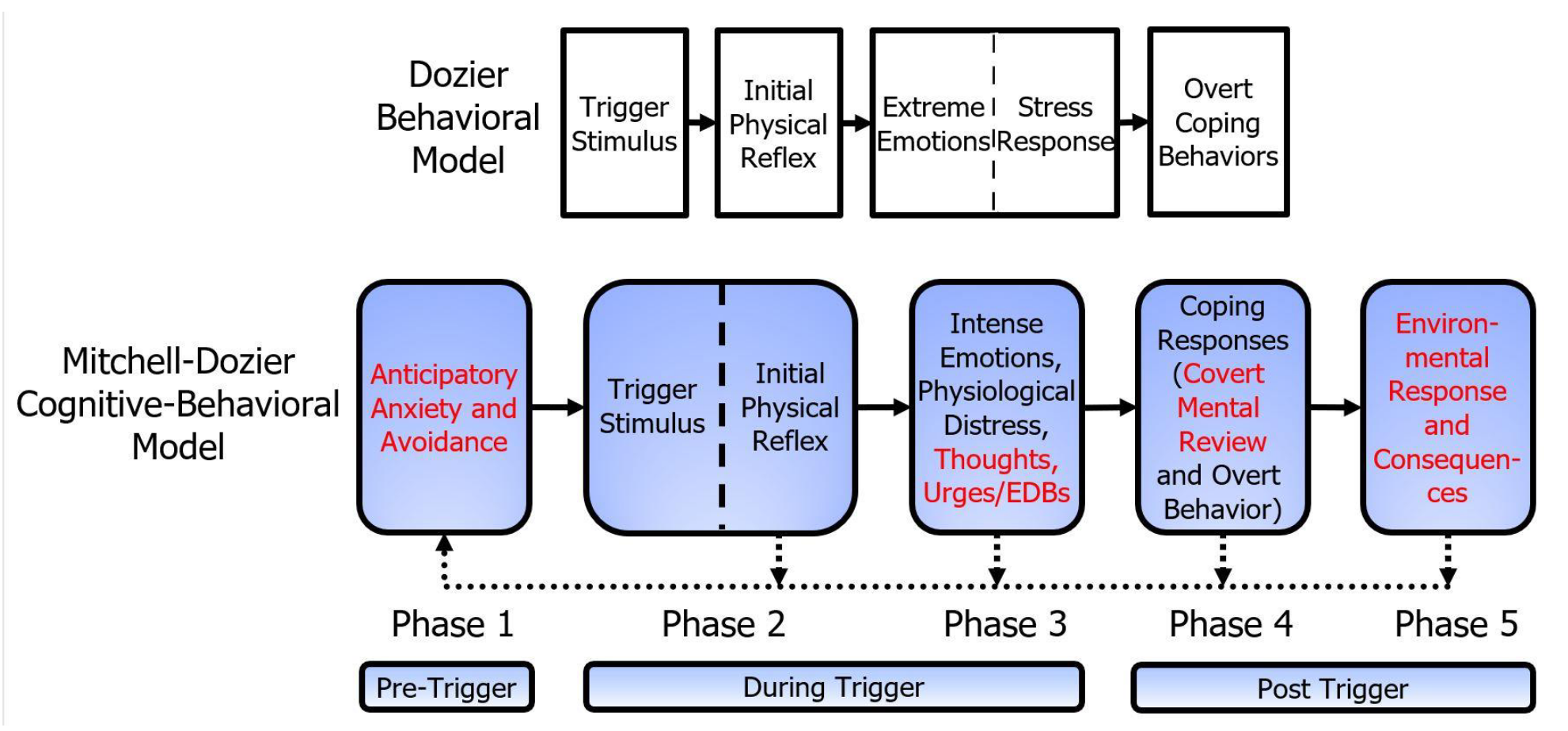
Core Mechanism- the model centers on a conditioned physical reflex (Initial Physical Reflex, or IPR, phase 2 of the model) formed through Pavlovian conditioning. This reflex involves automatic bodily responses such as muscle contractions or internal sensations, which then trigger the intense negative emotional reactions typical of misophonia.
Behavioral Evidence:- Studies report an Initial Physical Reflex (IPR) in some individuals, including muscle tension, chest pain, or intestinal constriction. Anticipatory anxiety and avoidance (Phase 1) are common and contribute to dysfunction, while coping after triggers (Phase 4) often involves aggressive behaviors or a covert mental review of the event. The effectiveness of CBT and ACT treatments further supports misophonia as a learned condition.
Neuroimaging Evidence- fMRI studies show increased activity in regions tied to emotional regulation and learning, such as the vmPFC and anterior insula, in people with misophonia. These findings suggest the condition reflects a learned emotional reflex. The anterior insula’s role in integrating internal and external sensations supports the inclusion of the IPR in triggering responses, while mirror neuron involvement for oral and facial movements points to a possible motor basis.
Upstream Mechanism (Etiology/Development)- The etiology of misophonia is explained by the development of the Initial Physical Reflex (IPR) through Stimulus-Response Pavlovian conditioning. Here, a conditioned reflex forms when a stimulus like a chewing sound consistently precedes a muscle response such as breath holding, even without a traditional unconditioned stimulus or response. New triggers can arise independently, by pairing neutral sounds with existing triggers, or through generalization of trigger stimuli.
Supporting Findings- A pilot study found the IPR occurs rapidly, about 200 ms for auditory triggers and 350 ms for visual triggers, much faster than the 2 second delay of skin conductance responses. The IPR is strengthened through repeated exposure, as the intense emotions it provokes reinforce the reflex, which explains why symptoms often worsen with exposure. Reports of spontaneous recovery after treatments that reduce the IPR are consistent with the known properties of conditioned reflexes.
Explains Key Misophonia Features:-
Intense Negative Emotions: These emotions (Phase 3), such as anger, disgust, and anxiety, develop because of the aversive and intrusive nature of the IPR (Phase 2).
The Cyclical Nature of Dysfunction: The repeated, aversive experiences of Phases 2 through 5 lead to overwhelming anticipatory anxiety and avoidant behavior (Phase 1), which further intensifies learned responses and perpetuates the dysfunction and impairment in a dynamic, cyclical pattern.
Increased Severity: Phase 1 (anticipatory anxiety) contributes to increased arousal and hypervigilance (e.g., scanning for triggers), which increases the awareness and perceived severity of the subsequent trigger experience. - Chronic Status: Misophonia is viewed as a result of a normally functioning neurological process (Pavlovian conditioning), meaning that even if symptoms extinguish, the patient remains vulnerable to developing new triggers or the reemergence of prior triggers, suggesting the condition is chronic and requires continual management. - Specific Symptoms and Beliefs: The model accounts for specific post-trigger cognitions, such as the mental review (Phase 4), which reinforces the belief that the next trigger will be intolerable and must be avoided. Internal consequences (Phase 5) include the development of emotions like shame and guilt based on environmental responses to anger/panic.
textual overview/summary
The Mitchell-Dozier model presents a novel five-phase, cognitive-behavioral framework that conceptualizes misophonia as a conditioned aversive reflex disorder. Its central mechanism is the Initial Physical Reflex (IPR), a specific, involuntary physical response (e.g., a discrete muscle contraction) that develops through Pavlovian conditioning. The model posits that this IPR is the primary conditioned response to a trigger stimulus and that its intrusive, aversive sensation is what elicits the subsequent intense emotional and physiological distress characteristic of the disorder. This core mechanism is situated within a self-reinforcing cycle composed of five phases: (1) anticipatory anxiety and avoidance, which primes the individual for a heightened response; (2) the IPR itself; (3) the intense emotional and physiological response to the IPR; (4) post-trigger operant coping behaviors; and (5) the internal and external environmental consequences that reinforce the entire cycle.
The model's primary theoretical contribution is the positing of Stimulus-Response (S-R) Pavlovian conditioning as the etiological mechanism of the IPR, which accounts for the etiology of the reflex from the simple temporal pairing of a stimulus and a response, without requiring a traditional unconditioned stimulus. This framework identifies unique and testable components of the misophonic experience, most notably the IPR and the "covert mental review" that occurs in the post-trigger coping phase. By shifting the diagnostic focus from specific trigger modalities to the underlying conditioned response mechanism, the Mitchell-Dozier model offers a more inclusive definition of misophonia and provides a comprehensive, coherent basis for future empirical investigation and the development of targeted therapeutic interventions.
Misc. model data points
headerless
Body
Jastreboff 2023 idea that the complex conditioned stimuli in Misophonia explains a few oddities in Misophonia
In their 2023 review of misophonia, the Jastreboffs argue that misophonia reflects complex conditioned stimuli in which triggers encompass not only acoustic features but also contextual and interpersonal associations. This model explains why certain sound classes, such as eating or breathing, are common triggers due to their social and emotional salience. It also accounts for stronger reactions to sounds produced by specific individuals, often close family members, because personal history becomes embedded in the conditioned response. Moreover, variability in reactions based on source identification supports this framework: if acoustic properties alone determined the response, intensity would remain constant, but the observed modulation indicates activation of a broader conditioned network (Jastreboff & Jastreboff, 2023).
support
headerless
Body
In a 2020 study of three individuals with misophonia, Dozier and colleagues found that misophonic triggers elicited immediate, visible muscle contractions that were individualized in location and occurred reliably whenever participants rated their physical response as moderately strong (≥4), while no such responses appeared in controls. One participant showed consistent EMG-detected muscle activation across trigger types, another showed EMG activation only at higher intensities, and a third displayed visible but not EMG-detectable responses; controls showed no EMG activity. Auditory response latencies of ~150–200 ms (and ~300 ms for visual stimuli) indicated a rapid, reflexive mechanism rather than secondary emotional arousal. Together, these findings provided objective evidence that misophonic triggers can elicit an immediate, individualized skeletal muscle reflex, supporting the authors’ conclusion that misophonic stimuli evoke an elicited physical response. (Dozier et al., 2020)
headerless
Body
In a 2019 fMRI study, Schröder and colleagues presented participants with trigger, neutral, and generally aversive sound clips and observed recruitment of the anterior cingulate cortex and superior temporal cortex in individuals with misophonia, suggesting a role for aberrant salience attribution. The authors proposed a classical conditioning account in which trigger sounds initially evoke physiological arousal and negative emotions, with repeated exposure strengthening these associations over time. These responses are further amplified by hypervigilance (Schröder et al., 2019)
headerless
Body
a 2015 case study showed marginal improvements in Misophonic physical symptoms using a counterconditioning approach to treat reflexive muscle resposnes to a specific trigger
In a 2015 case report, Dozier presented the results of a counterconditioning approach to treating misophonia. Operating under the framework of misophonia as a conditioned reflex disorder, Dozier employed the Neural Repatterning Technique (NRT) in combination with Progressive Muscle Relaxation (PMR), delivered via a custom mobile app. The intervention paired individualized trigger sounds with positive stimuli, such as soothing music. Over the course of seven days, the patient's physical reflex response was significantly reduced, and her emotional responses also diminished, even though they were not directly targeted. Based on these outcomes, Dozier proposed that this supported a model of misophonia in which the emotional response follows from an initial physical reflex. (Dozier, 2015)
notebook llm report on Jastreboff model of misophonia
bulleted overview/summary
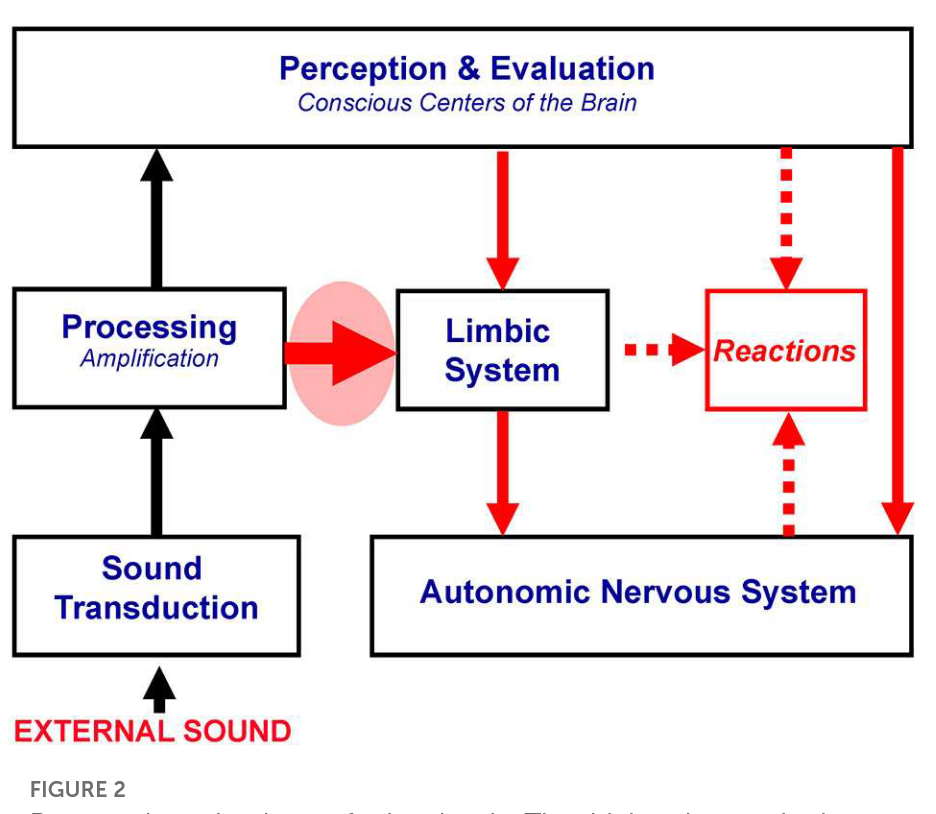
Core Mechanism:-Misophonia arises from subconscious conditioned reflexes that overly connect the auditory system with the limbic and autonomic systems. This heightened linkage produces fast, automatic, and involuntary negative reactions to certain sounds.Integrated Model:-The model proposes that misophonia stems from strengthened connections between the auditory, limbic, and autonomic systems. Importantly, each system may function normally on its own, with the auditory system playing a secondary role since the physical properties of sounds are often irrelevant to the reaction.
Limbic-Auditory System Disconnect: Jastreboff's model proposes that misophonia results from a dysfunctional interaction between the limbic system, which is responsible for emotional processing, and the auditory system. This disconnect leads to an inappropriate emotional response to certain sounds, which are perceived as threatening or highly irritating.
Emotional Hyper-Reactivity: The model emphasizes that the emotional response to trigger sounds is disproportionate due to the limbic system's overactivation. This heightened emotional reactivity can lead to feelings of anger, anxiety, or distress when exposed to specific auditory stimuli.
Behavioral Evidence:- The model is supported by clinical observations that patients cannot control their emotional reactions and know they are disproportionate, pointing to a subconscious trigger. These reactions are rapid, shaped by the pattern and meaning of the sound rather than its intensity, and are reduced when the sound is not linked to its original source.
Upstream Mechanism (Etiology/Development):-Misophonia is thought to develop through a form of classical conditioning: when certain sounds occur alongside intense distress, pain, or negative experiences, they become conditioned triggers. These sounds are tied not just to their acoustic features but also to personal experiences, relationships, and perceived control, making them complex conditioned stimuli. (similar to the dozier model?)
Supporting Findings (Objective/Clinical Validation):- Physiological studies show misophonia produces distinct autonomic effects and often co-occurs with tensor tympani syndrome (e.g., fullness, pulsation, ear pain), which resolves with treatment. A therapy based on extinguishing subconscious conditioned reflexes reports an 83% success rate.
Explains Key Misophonia Features:- The model explains misophonic triggers as complex conditioned stimuli, where context matters more than loudness or intensity. Patients may react strongly to soft, specific sounds while tolerating louder neutral ones, and their negative reactions persist despite knowing the sounds are harmless, highlighting the role of subconscious, involuntary mechanisms.
Textual overview/summary
The neurophysiological model of misophonia, developed by Jastreboff and Jastreboff, conceptualizes the disorder as a manifestation of abnormally strong conditioned reflexes linking the subconscious auditory system with the limbic and autonomic nervous systems. This framework highlights that misophonia pathology is not located in the processing ability of the auditory system itself, which is postulated to be functioning within normal limits, but rather in the enhanced functional connectivity that rapidly translates specific auditory patterns into involuntary emotional and physiological distress. The disorder is defined by an abnormally strong reaction to a sound whose characteristics—unlike those in hyperacusis—are irrelevant or secondary; instead, the reaction is primarily determined by the sound's specific pattern, meaning, context, or source for that individual, classifying the trigger as a complex conditioned stimulus.
This model provides a clear mechanistic basis for misophonia that informs a targeted treatment approach focusing on the extinction of these specific subconscious conditioned reflexes. Treatment, adapted from Tinnitus Retraining Therapy (TRT), employs specific counseling and sound therapy strategies that utilize principles of generalization and modification of complex conditioned stimuli to weaken the pathological auditory-limbic-autonomic links. By asserting that misophonia is a non-pathological condition arising from aberrant neural learning, rather than a primary psychiatric disease, the model permits testable predictions regarding enhanced functional connectivity during exposure to context-specific triggers, while also predicting that the physiological output reactions are non-unique and shared with other chronic distress disorders. Clinically, this mechanism-based treatment has demonstrated high effectiveness, supporting the underlying neurophysiological explanation
external support
headerless h1
Body
a study looking at the auditory processing of Misophonics vs controls found evidence for altered cortical auditory processing for those with mild-severe Misophonia BUT no differences in brainstem processing. (Karupaiah & Prabhu, 2025)
- this is also consistent with Kumar's idea of normal auditory processing idea -
headerless
Body
In their 2019 fMRI study, Schröder and colleagues presented participants with trigger, neutral, and generally aversive sound clips and found condition-dependent differences in emotional responses between individuals with misophonia and controls. Compared to controls, misophonic participants reported greater anger, disgust, and depressive symptoms, with anger being particularly elevated. In the misophonia group, exposure to trigger sounds also elicited increased physiological arousal and greater activation in the right insula, right anterior cingulate cortex, and right superior temporal cortex, implicating the salience network in misophonia and supporting earlier findings by (Kumar et al., 2017).
external contradictions
headerless h1
Body
a study looking at the auditory processing of Misophonics vs controls found evidence for altered cortical auditory processing for those with mild-severe Misophonia. specifically found that Misophonics may misophonia may exhibit alterations in binaural integration and temporal ordering processes.
(contradicts the Jastreboff model assumption of normal auditory processing ) (page 8)
2. Etiological / Developmental Models
Misc.
bold-headers
familial history of sound sensitivity in Misophonics
Molthrop et al. (2026) surveyed 22 US caregivers of individuals with misophonia and found that nearly half reported their child had at least one relative with similar sound sensitivity issues, with fathers, mothers, and siblings most commonly identified as the affected relative. From this the authors suggest that the high rate of familial sound sensitivity may indicate an environmental or biological component of familial transmission, though they note that more rigorous methodologies are needed to investigate this possibility (Molthrop et al., 2026).
bold-headers
Ward 2022 findings of heighted sensitivity to conditioned cues and enhanced discrimination learning in Misophonia
In their 2022 study, Ward et al. examined whether misophonia symptoms were associated with overgeneralization, sharpened tuning, or all-or-nothing discrimination during auditory aversive conditioning. Behaviorally, the conditioned stimulus (CS+) elicited more negative and arousing ratings during acquisition, and higher MSS scores were linked to greater overall negative and arousing responses, with no evidence of behavioral overgeneralization. EEG results showed robust parieto-occipital alpha-band suppression to tone onset, with greater CS+-specific alpha reduction during acquisition that was best fit by an all-or-nothing discrimination model. Higher MSS scores were associated with stronger CS+-specific alpha suppression, indicating enhanced neural discrimination rather than generalized responding. The authors concluded that misophonia symptoms are not characterized by overgeneralization but instead reflect heightened sensitivity and increased attentional engagement to conditioned threat cues, with neural evidence supporting enhanced discrimination learning. (Ward et al., 2022)
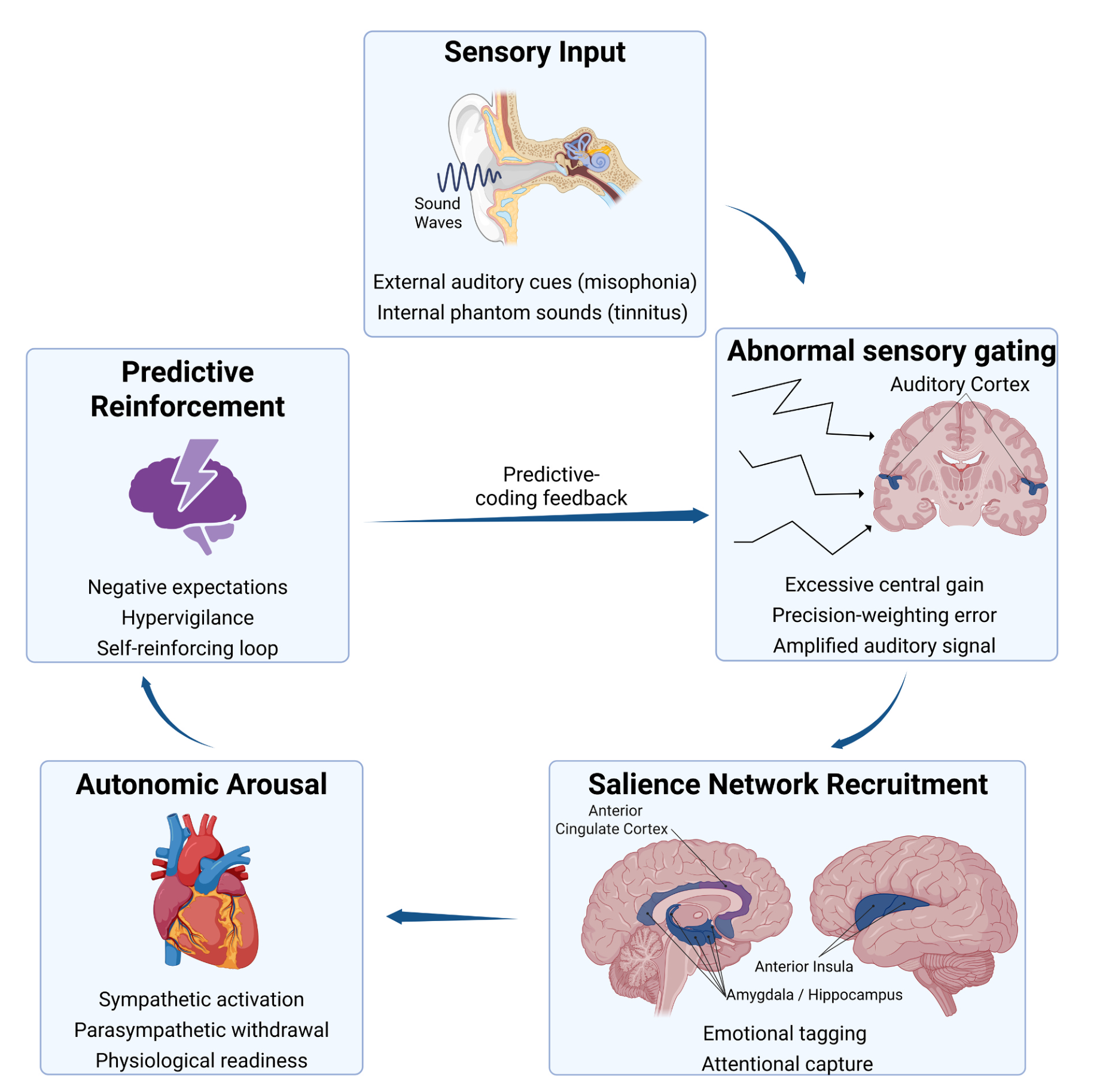
The Sensory–Salience Dysregulation Model (Melanthiou et al., 2026) (SSDM) proposes a unified neurobiological framework for tinnitus and misophonia by emphasizing interacting sensory, salience, and autonomic processes rather than isolated auditory or emotional pathways. Both conditions are understood as arising from abnormal sensory encoding with excessive central gain, where amplified auditory signals emerge either from peripheral damage and compensatory central hyperactivity in tinnitus (producing phantom sounds) or from exaggerated neural responses to specific external triggers in misophonia due to abnormal connectivity between auditory cortex, anterior insula, and premotor regions. These amplified signals then drive overactivation of the salience network (ACC, insula, amygdala), which assigns excessive importance to the sounds and fails to habituate them, causing persistent tagging as salient or threatening and recruiting attentional systems. Finally, the model highlights autonomic dysregulation reinforced through predictive coding errors, where impaired sensory gating increases uncertainty in incoming input, shifting perception toward top-down predictions . Because the brain estimates reliability based on the consistency of sensory input and prior experience (precision Weighting), degraded or noisy input leads it to overweight internal predictions. This results in maladaptive internal models that manifest as phantom percepts in tinnitus and intrusive, emotionally charged responses in misophonia, with these patterns becoming reinforced over time through neuroplasticity.
predictions of the SSDM
the authors describes four main predictions made by the SSDM
symptoms correlating with hyperconnectivity: there will be a strong positive correlation between symptom severity and abnormalities in precision weighting inside the salience network, as evident by hyperconnectivity both at rest and during sound exposure.
efficacy of neuromodulator interventions: neuromodulator interventions for salience network excitability (e.g., low-frequency or inhibitory patterned TMS to the right anterior insula or dorsal ACC, or excitatory stimulation of dorsolateral prefrontal regions) should reduce distress to sounds regardless of the sounds perceptual qualities.
Dissociation between perceptual and affective outcomes: modulation of autonomic regulation should reduce symptoms without changing the auditory percept, as the primary dysfunction is in early sensory gating and precision weighting.
modulating symptom expression via manipulation of sensory precision and expectations: The model proposes that altering sensory precision and expectations, through combined sound-based therapies and cognitive restructuring, can rebalance bottom-up and top-down processing, thereby reducing the salience and autonomic reactivity to auditory stimuli in a way that is empirically testable. (Melanthiou et al., 2026)
detailed notes
a model introduced in (Melanthiou et al., 2026) that seeks to give a unified explanation for the neurobiological framework of both tinnitus and Misophonia
instead of isolating auditory / emotional pathways.
sees both Misophonia and tinnitus as arising from three primary sources:
Abnormal sensory encoding with excessive central gain
Common theme- excessive central gain results in amplified auditory signals
In tinnitus- peripheral auditory damage (ex hair cell loss, synaptic injury) results in compensatory hyperactivity of central auditory system, creating the persistent phantom sounds
In Misophonia- exaggerated neural responses the specific external cues resulting from abnormal brin connectivity with the auditory cortex, anterior insula, and premotor regions
Overactivation of the salience network
common theme- amplified sensory inputs engage salience network (anterior cingulate cortex (ACC), insula, and amygdala), assigning the stimuli more importance. in both instances, salience network fails to downregulate/habituate sounds, and instead continuously highlights and assigns importance to them, which in turn engaging the attentional system due to the sounds being marked as threating.
In Tinnitus- emotional salience is given to otherwise neutral phantom sound, and hypoconnectivities increases chances of the phantom sound capturing the attention system.
In misophonia-
autonomic dysregulation reinforced through predictive coding errors
core issues- failure in up stream sensory gating
precision weighting- how much the brain weights prediction error (sensory input vs expectations) based on its estimated reliability which is inferred from the consistency of sensory input and prior experience.
predictive coding – the brain’s process of generating predictions about sensory input and updating them based on the precision-weighted difference between predictions and actual input.
predictive coding error- the breakdown of predictive coding. applied to the SSDM proposing that tinnitus and misophonia emerge from an imbalance between bottom-up sensory information and top-down predictions; deafferentation or abnormal gating increases sensory uncertainty, causing the brain to rely on maladaptive internal models that manifest as phantom or intrusive percepts.
Misophonia as an extreme version of response to aversive sounds
headerless h1
Body
a 2021 study found that controls also classified trigger sounds as mildly aversive, leading the authors to propose that similar valance judgments used by controls are in play in the Misophonic response, just to a heightened degree. (Simner et al., 2021)
3. System-Level Mechanism Accounts
Misc.
headerless-h1
Body
affective switching deficits in Misophonia related to function of OFC
Black et al. (2026) link the observed affective switching deficits in misophonia to the role of the orbitofrontal cortex (OFC), noting that effective inhibition is essential for set-switching by suppressing competing task sets and minimizing interference during transitions. In misophonia, other works have shown the OFC shows hyperactivation specifically in response to trigger stimuli, and the authors argue this heightened activity reflects the OFC's role in facilitating functional synchronization across brain regions in ways that may directly influence behavioral task performance. From this they conclude that the reduced affective flexibility observed in misophonia is not simply a cognitive phenomenon but is grounded in identifiable neural dysregulation, with OFC hyperactivation serving as a plausible neural mechanism linking misophonic reactivity to impaired inhibitory control during affective switching (Black et al., 2026) .
headerless
Body
connectivity data supports the Kumar motor basis model of Misophonia and extends to include a subcortical anticipatory circuit
In a 2026 study, Ajmera attempted to identify neural connectivity-based markers of misophonia using an optimized machine learning framework applied to resting-state fMRI data from subjects categorized into misophonia-only (MI), misophonia-with-hyperacusis (MH), and control groups based on structured clinical interviews and established questionnaires. they found significant somatomotor network connectivity alterations found in both MI and MH groups which directly replicate Kumar et al.'s (2021) finding of motor network involvement in misophonia, converging across methodologies. The more novel extension comes from the MI-specific finding of decreased right globus pallidus connectivity, which the authors interpret as reflecting an anticipatory mechanism, a predisposition to internally simulate or mirror the orofacial gestures that generate trigger sounds. This subcortical finding aligns with and extends Kumar et al.'s motor basis model by suggesting the motor involvement in misophonia operates not just cortically but also through a subcortical anticipatory circuit. However, the authors caution that because their data are resting-state, the active role of the globus pallidus during trigger-sound processing requires task-based confirmation, and whether this mechanism extends to non-orofacial triggers remains an open question. (Ajmera et al., 2026)
headerless
Body
speculative role of medial superior olive (MSO)
in a 2026 study, Roy et al found normal ILD thresholds alongside elevated ITD thresholds in Misophonics vs controls. the authors suggest that this suggests functional deficits in brainstem circuits responsible for binaural temporal integration. they further point to the medial superior olive (MSO) due to its role in processing fine timing cues needed for spatial hearing, but they note that this interpretation is speculative and requires direct confirmation. (Roy et al., 2026)
headerless
Body
Disorder-Specific Salience-Network Insula Connectivity Supports a Spectrum Model of Misophonia
In a 2026 study, Hansen and colleagues sought to characterize the anterior insula connectivity profile of misophonia and determine whether it is distinct from anxiety, depression, and autism by analyzing resting-state fMRI data in a large open-access adult sample using seed-based connectivity methods. They estimated misophonia severity using a regression model trained in an independent dataset and applied it as a continuous predictor in connectivity analyses. They found that greater misophonia severity was associated with stronger anterior insula connectivity to clusters overlapping motor, somatosensory, and auditory regions, specifically within the salience network. From this, they concluded that misophonia is marked by a disorder-specific salience-network insular connectivity signature and is better conceptualized as a spectrum condition rather than a binary diagnosis (Hansen et al., 2026) .
-
Berger 2024 social-cognitive perspective
headerless
Body
Perception–Action Network Model: Auditory-Motor-Insula Pathway Linking Mimicry to Misophonic Distress
In their 2024 literature review, Berger outlines a social cognitive perspective of misophonia in which auditory stimuli are conveyed through lower auditory pathways to both higher-order auditory regions, such as the superior temporal sulcus, and to motor regions, where the sounds are transformed into motor representations of action. Individuals with misophonia show increased connectivity between the auditory system and motor cortex, suggesting an enhanced perception–action coupling. This aberrant motor-related signal is then communicated to the anterior insula, supported by findings of stronger motor–insula connectivity and increased insula activation in response to trigger sounds. Neuroimaging evidence further indicates that the anterior insula is engaged when countering mirrored actions, implying a role in processing error signals or conflict within the perception–action system. From there, the insula may relay signals to the amygdala, generating emotional responses, and to autonomic regions such as the periaqueductal gray, producing physiological changes including altered heart rate and skin conductance. Within this framework, the perception–action network offers a potential explanation for the high prevalence of mimicry in misophonia, as unconscious or deliberate imitation may serve to relieve distress by dampening insula hyperactivity (Berger et al., 2024).
-
Misophonia based on anterior insula hyperactivity and its implications for empathy subtypes
headerless
focus on the anterior insula hyperactivity and a subtype of empathy (model note)
In their 2024 literature review on misophonia and the role of social cognition, Berger discusses the chameleon effect, which refers to automatic mimicry that can enhance interpersonal liking and facilitate smoother social interactions. They note that the effects of mimicry depend on social context and the specific orientation of the mimicked behaviors, and that this phenomenon is typically stronger in individuals with higher levels of empathy. Empathy is generally divided into cognitive, affective, and motor components, each potentially supported by distinct neural mechanisms, yet its relationship to misophonia has not been systematically examined. Berger suggests that clarifying this link could determine whether mimicry in misophonia reflects heightened social cognitive processing or functions as a coping strategy to regulate hyperactivity in the anterior insula, a region that is overactive in misophonia and strongly implicated in empathic processing. They further propose that insula hyperactivity may reflect an increased expression of a specific subtype of empathy, with motor empathy, defined as the automatic imitation of others’ actions, potentially being more relevant to misophonia than cognitive or affective empathy, although no studies have directly tested empathy subtypes in this population. (Berger et a., 2024)
Misophonia as a difference in central auditory processing
headerless
reduced description
headerless
Body
a 2025 audiological assessment study using Extended High-Frequency Audiometry (EHFA) found the Misophonic group (b = 15) had significantly reduced thresholds (i.e. higher sensitivity) to tones in the extend high frequency range ( 8-14 kHz). these findings suggest differences in central auditory processing in Misophonics (Chalotra et al., 2025)
headerless
Body
having found lower hearing thresholds for higher end frequency sounds, the authors ponder that this sensitivity might be the result of neurophysiological adaptation, producing enhanced perceptual acuity toward specific sounds (specifically in high frequency range). they go on to suggest that these perceptual changes might be driven by cog/neural processes preferentially amplifying certain auditory stim, which enhances the Misophonic response. (Chalotra et al., 2025)
headerless
Body
In a 2023 study, Aryal and Prabhu investigated whether individuals with misophonia exhibit altered late latency auditory potentials, motivated by neuroimaging findings of increased activity in auditory cortical regions and comorbidity with other auditory disorders; they assessed this using standard audiological screening (case history, otoscopy, PTA, HFA, tympanometry) followed by ALLR recording (P1–N1–P2–N2) under controlled conditions with replication. They found distinct severity categories based on A-MISO-S scores, high-pitched sounds as the dominant trigger (~87%), earlier P1 and N1 peak latencies in Misophonic's (contrary to (Schröder et al., 2014)), no reduction in N1 amplitude, no P2/N2 differences, and no hearing threshold differences between groups, attributing discrepancies with prior work to methodological and stimulus differences. The authors conclude that while higher-level auditory processing (P2/N2) appears comparable to controls, earlier P1/N1 latencies suggest possible alterations in early cortical auditory processing in misophonia, supporting ALLR as a potential clinical correlate pending further validation. (Aryal & Prabhu, 2023)
4. Cognitive & Trait-Based Models
Misc.
Body
Misophonia severity linked to greater emotional switch costs, attributed jointly to reconfiguration difficulty and task-set inertia rather than either alone.
Black et al. (2026) examined affective switching costs in misophonia through the lens of two complementary theories of task-switching, finding that individuals with higher misophonia severity showed reduced accuracy on emotionally valenced switch trials. Task-Set Reconfiguration theory suggests these costs reflect impaired top-down cognitive control during the reconfiguration of a new emotional task set, consistent with documented cognitive control deficits in misophonia when confronted with triggers. Task-Set Inertia theory alternatively frames the costs as residual activation from prior task sets interfering with the transition to an emotional task, suggesting misophonic individuals may be especially susceptible to carryover interference during affective switching. The authors treat these accounts as mutually inclusive rather than competing, arguing that both reconfiguration difficulty and inertia-driven interference likely jointly contribute to the elevated emotion switch costs observed in this population (Black et al., 2026).
self-regulatory process model
headerless
Body
In a 2026 study, Black et al. investigated the relationships between misophonia severity and affective flexibility, cognitive flexibility, and rumination using the Memory and Affective Flexibility Task (MAFT), a neurocognitive paradigm embedding affective task-switching within an N-back working memory structure, alongside self-report measures in 140 adults. Results implicated two distinct but co-occurring layers of inflexibility: executive-level affective switching deficits captured by the MAFT and broader trait-level cognitive rigidity captured by the DFlex, which were uncorrelated and independently predicted misophonia severity. Rumination contributed a third dimension, linked to cognitive inflexibility and misophonia severity but dissociated from task-based affective flexibility, with mediation analyses showing that roughly 39–43% of the total effect of cognitive inflexibility on misophonia was carried through ruminative tendencies. These converging patterns argue that adequate models of misophonia must incorporate not just sensory sensitivity but self-regulatory processes spanning executive function, trait flexibility, and maladaptive repetitive cognition (Black et al., 2026).
framework of internalizing vs externalizing appraisals
headerless
Body
In a 2026 study, Woolley aimed to qualitatively characterize negative cognitions during and after misophonia triggers by analyzing interview responses from 60 treatment-seeking adults. many of the thinking patterns described by the subjects fit into the framework of internalizing vs externalizing appraisals. This framework, applied to the context of Misophonia, sees the difference of such appraisals as when subjects blame themselves or interpret there reactions to triggers as personal failings ( internalizing) vs when subjects attribute blame to others for being rude or inconsiderate (externalizing) (Woolley et al., 2026a page 10)
Misophonia as a trait based hyper attention and imagery condition
headerless h1
Body
a 2021 study on the role of attention and imagery in Misophonia lead the authors to prose a trait- based cognitive model of misophonia.
Core Premise: Misophonia is not triggered by qualitatively different sounds but by common sounds (e.g., chewing, tapping) that most people find at least slightly unpleasant. However, Misophonics experience these sounds with extreme aversion due to underlying cognitive traits
Key Components of the Model:
Heightened Attention to Detail:
Misophonics exhibit a stronger focus on fine-grained sensory features.
This attentional style may lead to over-attending to sounds that others can ignore.
Cognitive Inflexibility:
Difficulty shifting cognitive focus or adapting to environmental changes.
Associated with traits like perfectionism, which may intensify negative evaluations of sound.
Vivid Auditory Imagery:
Greater capacity to mentally simulate sounds may lead to re-experiencing aversive sounds internally, prolonging distress even in the absence of real stimuli.
Shared Aversive Sound Spectrum:
Triggers in misophonia are not unique; they follow the same preference gradient as non-misophonics.
The difference lies in magnitude of aversion, not in type of stimulus.
Mechanism: Dispositional traits (attention to detail, inflexibility, vivid imagery) heighten the salience of mildly aversive stimuli → leads to greater emotional and behavioral reactivity → results in the clinical profile of misophonia.
Model Implications:
Misophonia is best conceptualized as an intensified expression of common sensitivities, mediated by cognitive style.
These cognitive traits may serve as vulnerability factors for the development or exacerbation of misophonia.
5. Cross-Condition Relationship Models
symptom Network Model
bold-headers
symptom network model to Misophonia
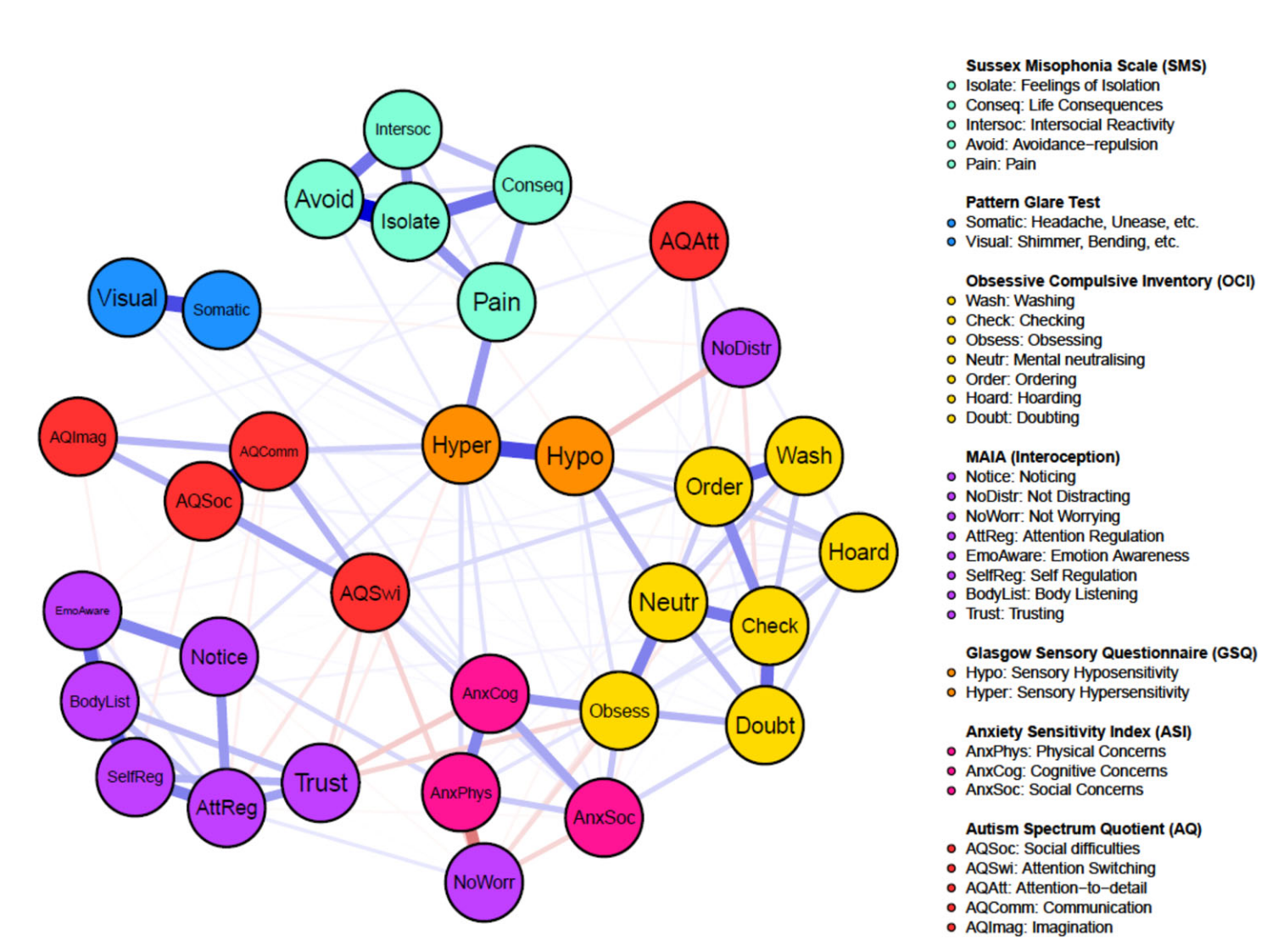
Andermane et al. (2023) modeled misophonia as a symptom network, an approach that treats a disorder not as a single underlying entity but as a web of individual symptoms (nodes) joined by direct relationships (edges estimated as partial correlations, which capture whether two symptoms still track together once every other symptom is accounted for, stripping out links that merely pass through a third symptom). Applied to 419 online participants using 31 nodes drawn from the Sussex Misophonia Scale (SMS), Autism Spectrum Quotient (AQ), Glasgow Sensory Questionnaire (GSQ), Obsessive-Compulsive Inventory (OCI), and Anxiety Sensitivity Index (ASI-3), the model let them gauge each symptom's centrality (how strongly it connects to the rest) and showed sensory sensitivity occupying a central, bridging position. The authors concluded that in this framework comorbidities arise from the mutual influence of symptoms that share connections rather than from one condition causing another, while cautioning that the network is correlational and not a causal model.
Misophonia, hyperacusis, and autism traits models
headerless
Body
in their 2026 literature review, Melanthiou describes how Hyperacusis, tinnitus, and misophonia share increased central auditory gain and hyperactivity in regions like the inferior colliculus (IC), auditory cortex, and salience network (anterior insula, ACC), suggesting hyperacusis may act as a general sensory hypersensitivity that amplifies symptom severity and distress in the other conditions (Melanthiou et al., 2026 ).
headerless-h1
Body
in a 2026 paper, Yamazawa describes three conceptual models for the relationship between Misophonia, hyperacusis, and autism traits, ultimately finding the most support for the hyperacusis meditated model. (Yamazawa & Midorikawa, 2026)
Autism-Interdependent Model
This model proposes that autistic traits independently contribute to both hyperacusis and misophonia. In this framework, each condition is directly linked to autistic traits but not causally linked to each other. Hyperacusis and misophonia are assumed to arise from separate underlying mechanisms. The model suggests parallel but distinct pathways from autistic traits to each form of decreased sound tolerance.
Hyperacusis-Mediated Model
This model proposes that autistic traits first contribute to hyperacusis, which then leads to misophonia. Hyperacusis functions as a mediating mechanism between autistic traits and misophonia. In this account, general sound intolerance precedes and contributes to the development of selective sound aversion. The model supports a hierarchical and potentially developmental progression.
Misophonia-Mediated Model
This model proposes that autistic traits first contribute to misophonia, which then leads to hyperacusis. Misophonia serves as the mediating mechanism linking autistic traits to broader sound intolerance. In this framework, selective emotional reactivity to specific sounds precedes generalized sound sensitivity. The model implies that misophonia may be the primary alteration driving later hyperacusis
6. Biological Hypothesis Models
Misophonia as an iron dysregulation disorder
headerless
Body
Dheerendra & Ramesh 2025 Iron dysregulation model of Misophonia
in a 2025 hypothesis, article Dheerendra & Ramesh proposes a novel model of Misophonia suggesting that misophonia arises from a self-perpetuating cycle of iron dysregulation in the mirror motor cortex. Chronic hyperactivity in this region, particularly the orofacial area involved in action mirroring, leads to increased metabolic demand and elevated cerebral blood flow, facilitating excessive iron accumulation. This iron buildup induces oxidative stress and low-grade neuroinflammation, which in turn promotes maladaptive long-term potentiation and reduces inhibitory control. The resulting disinhibition enhances connectivity with sensory cortices, reinforcing pathological hyper-mirroring and involuntary mimicry of trigger sounds. This cycle sustains and exacerbates misophonic symptoms. The authors propose that targeting this loop through neuroimaging, iron-modulating treatments, or neural modulation could offer promising therapeutic interventions. (Dheerendra & Ramesh, 2025)
7. Translational / Treatment Implications
bold-headers
Mediation of the misophonia–childhood trauma relationship as support for prioritizing skills training and the use of Dialectical Behavior Therapy as misophonia interventions
A 2026 study found that the presence of emotion regulation difficulties mediated the relationship between childhood trauma and misophonia severity. They go on to describe how the findings of impulse control difficulties being a key link suggests that the management of sudden, intense emotional behavioral reactions should be prioritized in misophonia interventions, suggesting Dialectical Behavior Therapy as one approach, given its strong emphasis on distress tolerance and impulse control skills (Kılınçel et al., 2026) .
headerless
Body
predictive coding model suggests manipulation of sensory precision and expectations could act as a form of treatment in Misophonia and tinnitus
in there 2026 review, Melanthiou proposes that operating under a predictive coding error model of Misophonia and tinnitus, altering sensory precision and expectations, through combined sound-based therapies and cognitive restructuring, can rebalance bottom-up and top-down processing, thereby reducing the salience and autonomic reactivity to auditory stimuli in a way that is empirically testable. (Melanthiou et al., 2026)
headerless
The cognitive behavioral trigger cycle in childhood misophonia
Guzick et al. (2024) proposed a cognitive behavioral trigger cycle based on thematic analysis of 20 youth-parent dyad interviews, organizing trigger-related processes into four sequential phases: trigger anticipation (preparatory avoidance, anticipatory anxiety, hypervigilance, family accommodation), the trigger itself, near-automatic trigger response (urge to escape, lack of attentional control, overwhelming emotional experience, automatic negative attributions, tension), and secondary response (redirecting attention, relaxation, escape, aggression). The authors concluded that this cycle organizes the candidate CBT targets in childhood misophonia and clarifies which processes are pre-cognitive and reactive versus deliberate and modifiable (Guzick et al., 2024).
8. Integrative / Comparative Overviews
Berger 2024 key factors of any Misophonia model
headerless
Body
In their 2024 literature review on misophonia and the role of social cognition, Berger and colleagues outline several key factors that they argue are essential to consider in any potential model of misophonia:
The source of the sound is a critical factor in triggering responses; perceived origin and context shape the intensity of the reaction.
Trigger sounds recruit the anterior insular cortex, a region implicated in social and emotional processing.
Trigger sounds are associated with hyperactivation of the motor cortex in individuals with misophonia.
The auditory cortex does not show differential activation in misophonia compared to controls, suggesting the condition is not primarily a disorder of basic auditory processing.
There is a high prevalence of mimicry among individuals with misophonia, which may reflect altered perception–action coupling. (Berger et al., 2024)