Properties (15)
- purpleRed
- (Smit et al., 2023)
- Misophonia
A genome-wide association study of a rage-related misophonia symptom and the genetic link with audiological traits, psychiatric disorders, and personality
Status:: #status/Bare-bones-review
Metadata
- Item Type: #journalArticle
- Authors:: Dirk J. A. Smit, Melissa Bakker, Abdel Abdellaoui, Alexander E. Hoetink, Nienke Vulink, Damiaan Denys,
- Date Added: July 9, 2026
- URL: https://www.frontiersin.org/articles/10.3389/fnins.2022.971752/full
- DOI: 10.3389/fnins.2022.971752
- Cite Key: smitGenomewideAssociationStudy2023
- Tags:: #Bare-bones-review-🦴, #clinical, #geneticts, #Misophonia,
- PDF Attachments
Abstract
| Background/Purpose | Background- • Misophonia trigger sounds provoke disproportionate anger, anxiety, and/or disgust, with emotional responses or avoidance impairing family relations and work life. • A consensus panel could not converge on a clear nosology, classifying misophonia as either a "psychiatric disorder" or the broader "medical disorder," and concluded genetic and neurobiological knowledge is lacking (Swedo et al., 2022). • Genetic etiologies of psychiatric and other disorders show pervasive correlations and strong cross-disorder clustering, informing nosology (Bulik-Sullivan et al., 2015; Lee et al., 2019). • Phenotypic comorbidities make significant genetic correlations with MDD, ASD, and ADHD most likely, possibly also OCD and Tourette's, plus personality dimensions (Jager et al., 2020). • Initially defined as a form of decreased sound tolerance, misophonia may bear relation to audiological disorders and related traits (Jastreboff and Jastreboff, 2001a). • A prior 23andMe symptom GWAS reported one locus (rs2937573, intronic to TENM2) but was never functionally annotated (Fayzullina et al., 2015). Purpose- • Functionally annotate the rage-related misophonia symptom GWAS to reveal neurobiological function of risk SNPs. • Calculate and cluster genetic correlations between the misophonia symptom and a wide range of audiological, psychiatric, personality, and other traits to place misophonia in a network of disorders and aid its nosology. |
| Participants/samples | • Misophonia proxy: 23andMe GWAS (Fayzullina et al., 2015) on the item "Does the sound of other people chewing fill you with rage?"; N = 80,607 yes/no responders; not peer-reviewed. • Positive-response prevalence overestimates clinical misophonia prevalence. • Participants required >97% European ancestry; no selection on gender. • Comparison set: 43 traits (Audiological 10, Psychiatric 11, Personality 15, Other 8) plus the misophonia symptom, giving 44 GWAS total. [Source alternates between "43 traits" and "44 GWASs"; reconciled here as 43 comparison traits + misophonia.] • Psychiatric disorder GWAS were clinically ascertained case-control studies from the PGC; several personality-trait GWAS came from the UK Biobank NealeLab collection. |
| Measures | • Adapted for a genomic study — "measures" here are the GWAS phenotype definitions rather than behavioral/physiological instruments. • Audiological (UK Biobank): speech-in-noise perception thresholds (SNR left/right), Hearing aid, Hearing problems, Loud music exposure. • Tinnitus (UK Biobank): Ever Tinnitus, Current Tinnitus, and Current Tinnitus restricted to good hearing. • "Other" category: neurological disorders (Alzheimer's, Parkinson's, epilepsy), insula surface area and thickness, Educational Attainment, Townsend Index. |
| Procedures | • Adapted for a genomic study — "procedures" here are the analysis pipeline rather than stimuli/task. • Functional annotation via FUMA/MAGMA gene-based analysis plus eQTL lookup (GTEx, BRAINEAC, eQTLgen). • TWAS via FUSION across 10 GTEx brain tissues and whole blood, with FDR correction and Bonferroni adjustment across tissues using spectral-decomposition–estimated effective degrees of freedom. • Genetic correlations estimated with GenomicSEM bivariate LD-score regression; FDR-corrected. • Clustering via corrplot hierarchical ordering and iGraph Louvain modularity optimization; cluster consistency assessed by Monte-Carlo resampling of the correlation matrix. |
| Results | • Two genome-wide significant loci: a chromosome 5 region intronic/flanking to TENM2 (top SNP rs2937573), and a chromosome 1 region near the RN7SK pseudogene whose LD block contains an eQTL for NEGR1. • MAGMA gene-based analysis yielded one Bonferroni-significant gene, TMEM256. • TWAS implicated TFB1M expression in hippocampus as the only significant effect. • The misophonia symptom showed substantial SNP heritability with well-controlled inflation. • Audiology: moderate positive correlations with tinnitus (Ever and Current); other audiology traits non-significant; misophonia unrelated to hearing performance/hearing loss, whereas tinnitus overlapped with hearing-trauma variables; loud music exposure's correlational pattern resembled misophonia yet its direct correlation with misophonia was low and non-significant. • Psychiatric: significant positive correlations with MDD, PTSD, and anxiety (strongest); a nominal negative correlation with ASD; no significant correlation with OCD, ADHD, anorexia, or psychotic disorders. • Personality: significant positive correlations with guilt, loneliness, miserableness, nerves, neuroticism (strongest), irritability, sensitivity, tense feelings, and worry; no negative correlations; aggression positive but non-significant. • Two personality clusters emerged (neuroticism/guilt and irritability/sensitivity); misophonia sat in the neuroticism/guilt cluster while also overlapping the irritability/sensitivity cluster, closely following the psychiatric disorders. • Significant negative correlation with educational attainment, driven by non-cognitive rather than cognitive EA variance; Townsend Index non-significant; no correlations with neurological disorders or insula measures. • Graph clustering grouped misophonia with MDD, PTSD, anxiety, and guilt/neuroticism personality traits; membership was highly consistent on resampling, with weaker concordance for anxiety and ASD (the latter based on a consistently negative correlation, since sign is disregarded). |
| Discussion/Limits | Conclusion- • TENM2's association could reflect altered sensory processing via differential sensori-thalamic connectivity, though the absence of TENM2 eQTLs in the significant LD block complicates a teneurin-expression pathway; nearby GABA receptor genes could mediate through excitation/inhibition balance, but their primary role as epilepsy susceptibility genes, with no misophonia–epilepsy correlation found, argues against this. • Functional annotations did not point consistently to specific risk genes or neural mechanisms despite significant SNP-based heritability. • Misophonia is not merely a sensory disorder tied to sensory trauma or hearing loss, though it shares genetic etiology with tinnitus. • The unexpected negative ASD correlation suggests misophonia and ASD are relatively independent genomically, with the small protective effect suggestively mediated by ASD's positive correlation with cognition; this raises the possibility of distinct misophonia forms, one conditioning-driven and moderated by personality, another smaller subgroup driven by decreased sound tolerance not captured by this population-based GWAS. • The non-significant aggression and absent ADHD correlations support misophonia as more compulsive/internalizing than impulsive/externalizing, consistent with guilt about evoked anger driving distress. • Misophonia clusters genetically with psychiatric disorders (notably MDD and PTSD) and guilt/neuroticism personality dimensions, with lesser irritability contributions, supporting classification as a highly specific OCPD variant or a related psychiatric/personality disorder and potentially aiding DSM classification and personality-differentiated therapy. • The negative EA correlation mimics MDD's pattern and loads on non-cognitive (personality-related) EA variance, while the null Townsend Index suggests socioeconomic environmental factors play no substantial role. |
| Limitations:: | • The GWAS was based on a single self-reported symptom rather than a case-control misophonia diagnosis. • The sampled symptom used anger as the primary response, omitting other emotional responses (anxiety, panic) whose genetic correlation pattern is unknown. • Published GWAS were unavailable for OCPD, perfectionism/inflexibility, phonophobia, and hyperacusis, limiting the trait set. • UK Biobank and 23andMe participation bias (toward higher educational attainment) plus EU-ancestry restriction limit generalizability and raise the possibility of collider bias. |
| Future Directions:: | • Investigate whether teneurin or GABA genes contribute to misophonia etiology and how this could translate into pharmacological or neuromodulatory treatment. • Use GWAS of multiple misophonia symptoms to test whether different symptoms yield different genetics. • As more GWAS become available, examine sympathetic nervous system function and auditory–limbic connectivity, and whether shared genetics explains the PTSD overlap. • Pursue polygenic scoring in non-European case-control designs and match genetic data to hospital records to address participation and collider biases. |
| Relevance:: | • a study using genomic data from 23 and me to look at genetic correlates of rage related Misophonia symptoms ( user self reports of symptom as a proxy for Misophonia status) and other auditory conditions • provides the first large-scale genetic evidence suggesting that misophonia shares a common biological framework with internalizing psychiatric disorders and personality traits like neuroticism and irritability, rather than functioning primarily as an audiological disorder. |
Notes
key terms and concepts
misophonia – condition in which trigger sounds (e.g., chewing, breathing) provoke disproportionately strong, involuntary anger, anxiety, and/or disgust that may impair family and work life.
rage-related misophonia symptom – single self-report proxy phenotype: occurrence of rage when others produce eating/chewing sounds.
GWAS – genome-wide association study relating SNP variation to a trait.
genetic correlation (rG) – SNP-based shared genetic etiology between two traits, here estimated via LD-score regression.
SNP heritability – proportion of trait variance attributable to measured common SNPs.
TWAS – transcriptome-wide association study testing gene expression–trait association per tissue.
eQTL – expression quantitative trait locus; variant regulating gene expression.
Louvain clustering – community-detection method optimizing modularity to group traits by genetic correlation strength.
my engagement notes
my questions
my comments
Bookmarks
reading notes
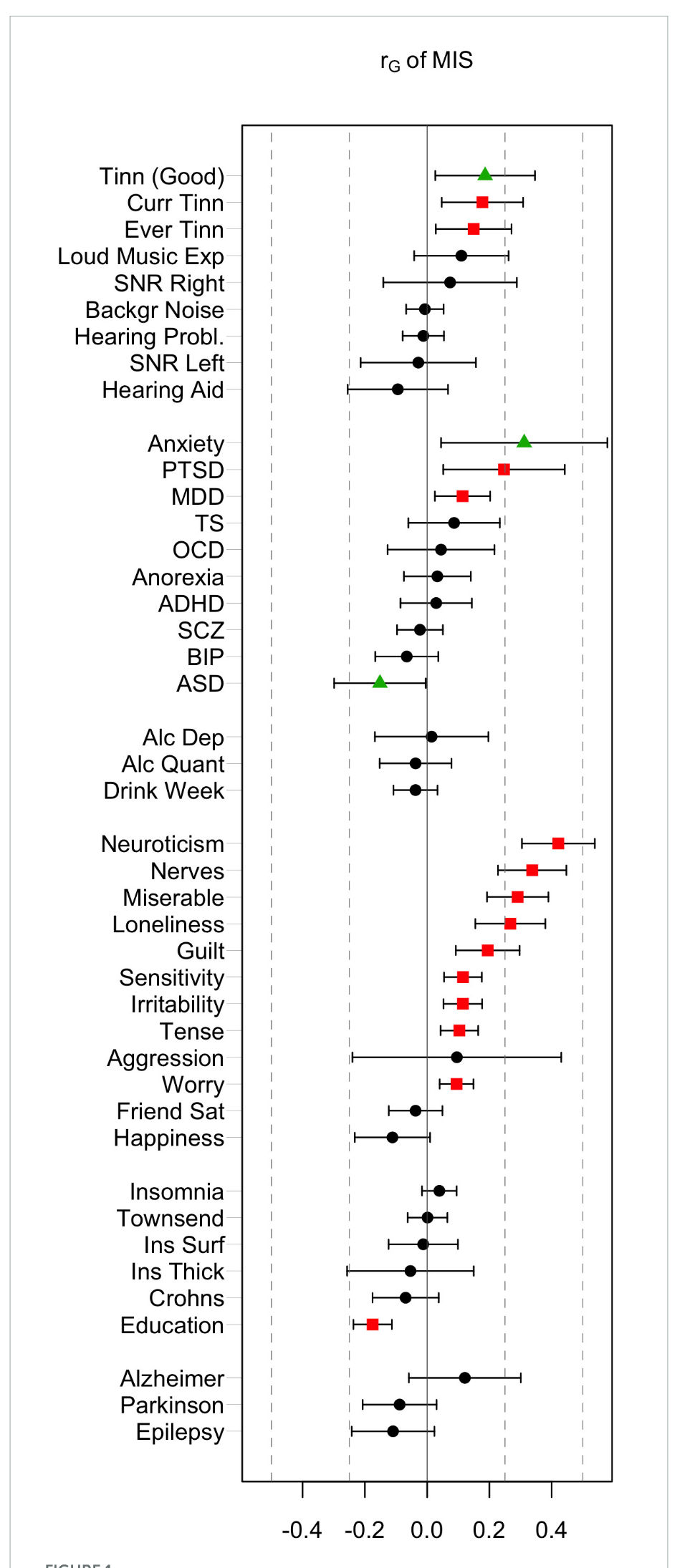
contextual statement
In a 2023 study, Smit attempted to clarify the nosology of misophonia by functionally annotating a 23andMe GWAS of a single rage-related chewing-sound symptom (N = 80,607, European ancestry) and computing LD-score genetic correlations and graph clustering against 43 audiological, psychiatric, personality, and other traits.
summary statement
In a 2023 study, Smit investigated the genetic architecture of misophonia by functionally annotating a rage-related symptom GWAS and computing genetic correlations with a wide trait set, then clustering them. They found two significant loci (near TENM2 and NEGR1), substantial SNP heritability, positive correlations with tinnitus, MDD, PTSD, anxiety, and neuroticism/guilt and irritability/sensitivity personality traits, a negative correlation with ASD and educational attainment, and null correlations with ADHD, OCD, and hearing-performance traits. From this they concluded that misophonia is not primarily a hearing-loss disorder but clusters genetically with MDD and PTSD alongside guilt/neuroticism personality dimensions, potentially classifiable as an OCPD variant or a related psychiatric/personality disorder.
Zettelkasten
Misophonia Symptom Shows SNP Heritability with Loci Near TENM2 and NEGR1
Neuroticism Traits, Not with Hearing Loss or ASD
speechify summary
Overview of Misophonia Genetic Research
- Research Objective: This study aimed to investigate the genetic underpinnings of misophonia—specifically the symptom of rage triggered by chewing sounds—to help clarify its classification as either a psychiatric or general medical disorder.
- Methodology:
- The researchers utilized an existing genome-wide association study (GWAS) from 23andMe regarding self-reported rage toward chewing sounds.
- They performed functional annotation (using FUMA and TWAS) to identify potential neurobiological determinants.
- Genetic correlations were calculated against 44 diverse traits, including audiological, psychiatric, and personality variables, using LD score regression and graph-based clustering.
Key Findings
- Genetic Loci:
- Significant associations were found near the TENM2 gene, which influences neuronal development and synapse formation, and the NEGR1 gene, linked to cognition and socioeconomic factors.
- Functional analysis suggests these markers may involve altered sensory processing or excitation/inhibition ratios in the brain, though no direct link to epilepsy was identified.
- Psychiatric & Personality Correlations:
- Misophonia shows significant positive genetic correlations with major depressive disorder (MDD), post-traumatic stress disorder (PTSD), and generalized anxiety disorder (GAD).
- Strong links were observed with two personality clusters: a neuroticism/guilt cluster and an irritability/sensitivity cluster.
- Audiological & Other Traits:
- A moderate genetic correlation exists between misophonia and tinnitus.
- Unlike tinnitus, misophonia does not show a genetic link to hearing loss or impaired hearing performance.
- The study observed a significant negative correlation with educational attainment, which the authors attribute to personality-related factors rather than socioeconomic environment.
Implications and Conclusions
- Nosology: Based on these genetic findings, the authors conclude that misophonia is best classified within a cluster of psychiatric disorders and personality traits consistent with anxiety, depression, and PTSD.
- Limitations: The study relied on a single self-reported symptom rather than a clinical case-control diagnosis, and the sample was limited to individuals of European ancestry.
- Clinical Relevance: Understanding the shared genetic etiology between misophonia and specific personality profiles may eventually help clinicians tailor therapy approaches to the underlying psychological dimensions of the patient.
In summary, this research provides the first large-scale genetic evidence suggesting that misophonia shares a common biological framework with internalizing psychiatric disorders and personality traits like neuroticism and irritability, rather than functioning primarily as an audiological disorder.