Properties (16)
- purpleRed
- The neurophysiological approach to misophonia
- (Jastreboff & Jastreboff, 2023)
- decreased sound tolerance (DST)
- phonophobia
- #Misophonia
- DST
- clinical
- Neurophysiological models
- treatment
- lit review
The neurophysiological approach to misophonia: Theory and treatment
Status:: #status/reviewed
Metadata
- Item Type: #journalArticle
- Authors: Pawel J. Jastreboff, Margaret M. Jastreboff,
- Date Added: February 22, 2024
- URL: https://www.frontiersin.org/articles/10.3389/fnins.2023.895574/full
- DOI: 10.3389/fnins.2023.895574
- Cite Key: jastreboffNeurophysiologicalApproachMisophonia2023
- Tags: #Misophonia, #Neurology, #literature-review, #treatment, #audiology, #hyperacusis, #autonomic-nervous-system, #definitions, #limbic-system, #subconscious-conditioned-reflexes, #tinnitus, #Hyperacusis, #decreased-sound-tolerance
Article Review Table: (Jastreboff & Jastreboff, 2023)
| Background/Purpose | Background- Purpose- • describe the origin and supporting data leading to the concept/definition of Misophonia • summarize the key observations accumulated over the three decades the authors have been treating people with decreased sound tolerance (DST), and how these observations support the idea that Misophonia is a different condition. • clarify misconceptions and controversies that have arisen surrounding Misophonia • justify the a potential model for Misophonia that is the result of combining clinical observations with basic neuroscience knowledge. (page 2) |
| Participants/samples | N/A |
| Measures | N/A |
| Procedures | lit review + first hand clinical experience |
| Results | N/A |
| Discussion/Limits | Conclusion- • a major takeaway from existing lit is that Misophonia reflects overly strong autonomic and limbic system reactions, stemming from hyper functional connectivity between auditory, limbic, and autonomic systems in response to specific trigger sounds. though the resposnes are not a function of the sounds themselves, but rather the result of ones interpretation /experience with the sounds. (page 7) Limitations- |
| Relevance:: | • a good lit review on the history of Misophonia research from the perspective of the Jasterboffs, with an emphasis on the neurophysiology of the topic. • make a point about the dominate feature of a trigger being the meaning it has for the individual Misophonic • provides some proposed mechanistic models of misophonia vs those proposed for hyperacusis • provides an interesting explanation for why some things are more likely to be triggers as a result of complex conditioning • provides examples of clinical observations dispositive of the dx criteria from Schröder 2013 • discuses Misophonia in the context of the neurophysiological model of DST • discusses the Jastreboffs proposed method of Misophonia treatment. primarily counseling + sound therapy • criticizes the Swedo definition of Misophonia for not being specific enough to distinguish Misophonia from hyperacusis. (page 6) |
Notes
key terms and concepts:
-
decreased sound tolerance (DST)- a class of auditory issues defined by abnormally negative reactions to sounds. this is an overarching term for a class of issues that includes things like Phonophobia and hyperacusis. (page 2)
-
phonophobia- an persistent and abnormal fear of sound. in the context of Misophonia , it could be considered a form of Misophonia where the dominate response is fear. (page 6)
my engagement notes
my questions
my comments
Bookmarks
-
bookmark for talking about the history of Misophonia (page 2)
-
bookmark for talking about Ménière’s disease. used to illustrate the potential problems that can arise when foundations of a research field are based on a faulty etiology (page 5)
-
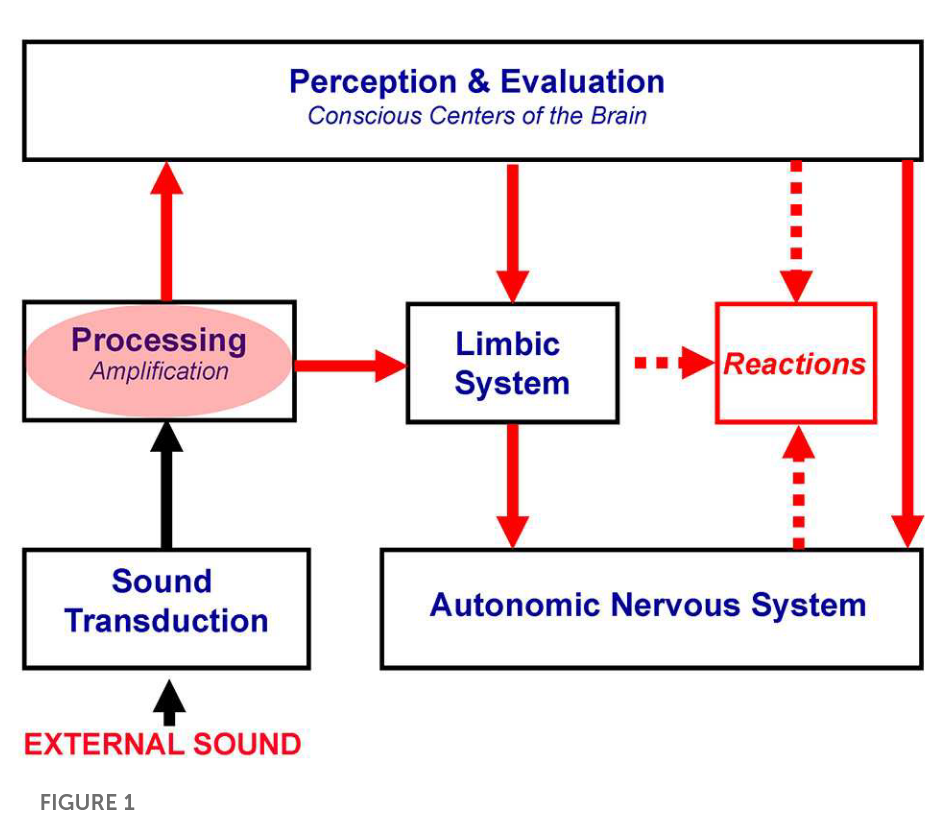
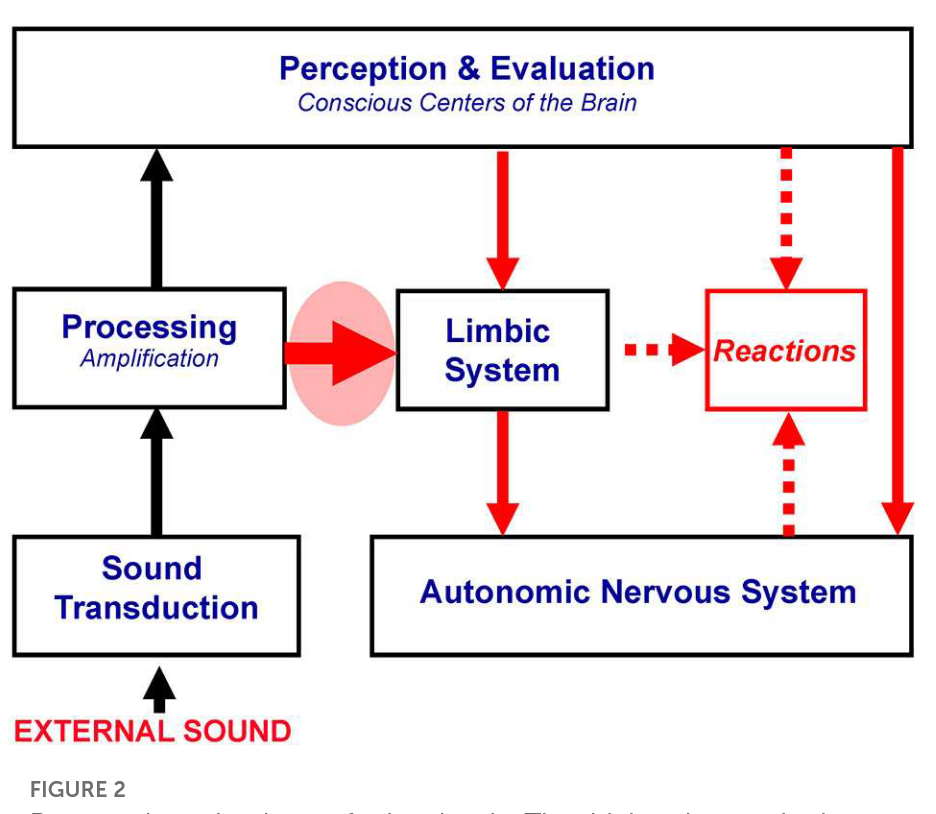
bookmark for talking about the logic behind the neurophysiological model of Misophonia and hyperacusis (page 6)
-
bookmark talking abut proposed treatments for both Misophonia and hyperacusis based on the model in the paper. (page 8)
-
bookmark for future directions (page 11)
reading notes
-
the lack of a consensus dx criteria means it is hard if not impossible to combine research results across studies because they end up using different rules for Misophonia status. (page 5)
-
a lot of Misophonia research is contaminated by the fact they fail to account for hyperacusis. this is a problem because despite the similar ( almost identical) reactions from both conditions, hyperacusis treatment is not effective for Misophonia
- this similarity runs the risk of confusing Misophonia results as actually hyperacusis results. (page 5) -
The authors argue that the similarity in symptoms between Misophonia and hyperacusis, makes it such that one should completely exclude people with hyperacusis from Misophonia research (page 5)
-
major diff between Misophonia and hyperacusis is that hyperacusis symptoms are the same for any stim, it is dependent on volume. in contrast, Misophonia is mainly about the stim source and identification, and loudness if secondary if relevant at all.. for instance, a Misophonic may react strongly to a trigger but fail to react to another, louder sound. (page 6)
-
the authors criticizes the Swedo definition of Misophonia for not being specific enough to distinguish Misophonia from hyperacusis. (page 6)
-
a big idea about Misophonia triggers is that the dominate feature of a trigger is its meaning to an individual Misophonic. this idea makes the topic more complex then a simple single stimulus, involving a complex interaction of of other dimensions ( ex: the environment, history with trigger, etc.) (page 6)
authors describe an idea that the complex conditioned stimuli in Misophonia explains a few oddities in Misophonia.
- specifically:
- why some classes of sounds are more likely to be triggers
- why different people ( most commonly close family) cause more interested resposnes then others
- the reduced resposnes to triggers that are not identified/misidentified. (page 7)
authors clinical experience working with Misophonics is dispositive of some of the dx criteria from Schroder 2013
- specifically:
- triggers are not all orofacial sounds or human sounds
- anger is not always a symptom
- aggressive outbursts are uncommon
- most Misophonics thing trigger are rude and their reactions justified.
- avoidance and discomfort are the primary responses
- resposnes can be mild, and can mimic those seen in tinnitus or hyperacusis - the authors then go on to criticize the Schröder model for not being very specific or selective , noting its tendency to lump in other unrelated issues ( ex: hyperacusis) and just generally claiming that the Schröder model is unhelpful;. (page 9)
models for hyperacusis vs Misophonia
zettlekasten
Jastreboff 2023 contradicting Schroder 2013 dx criteria
Jastreboff 2023 on the difference between Misophonia and hyperacusis