Properties (5)
Id 2ec93112-3653-47fa-86ca-b1f91ab3cbc6
Source
Similar
Leading
- Misophonia
- MisoCog2 project
- Cognitive observations and implications of Misophonia
Used In Writing misoCog2A in progress CD
Body
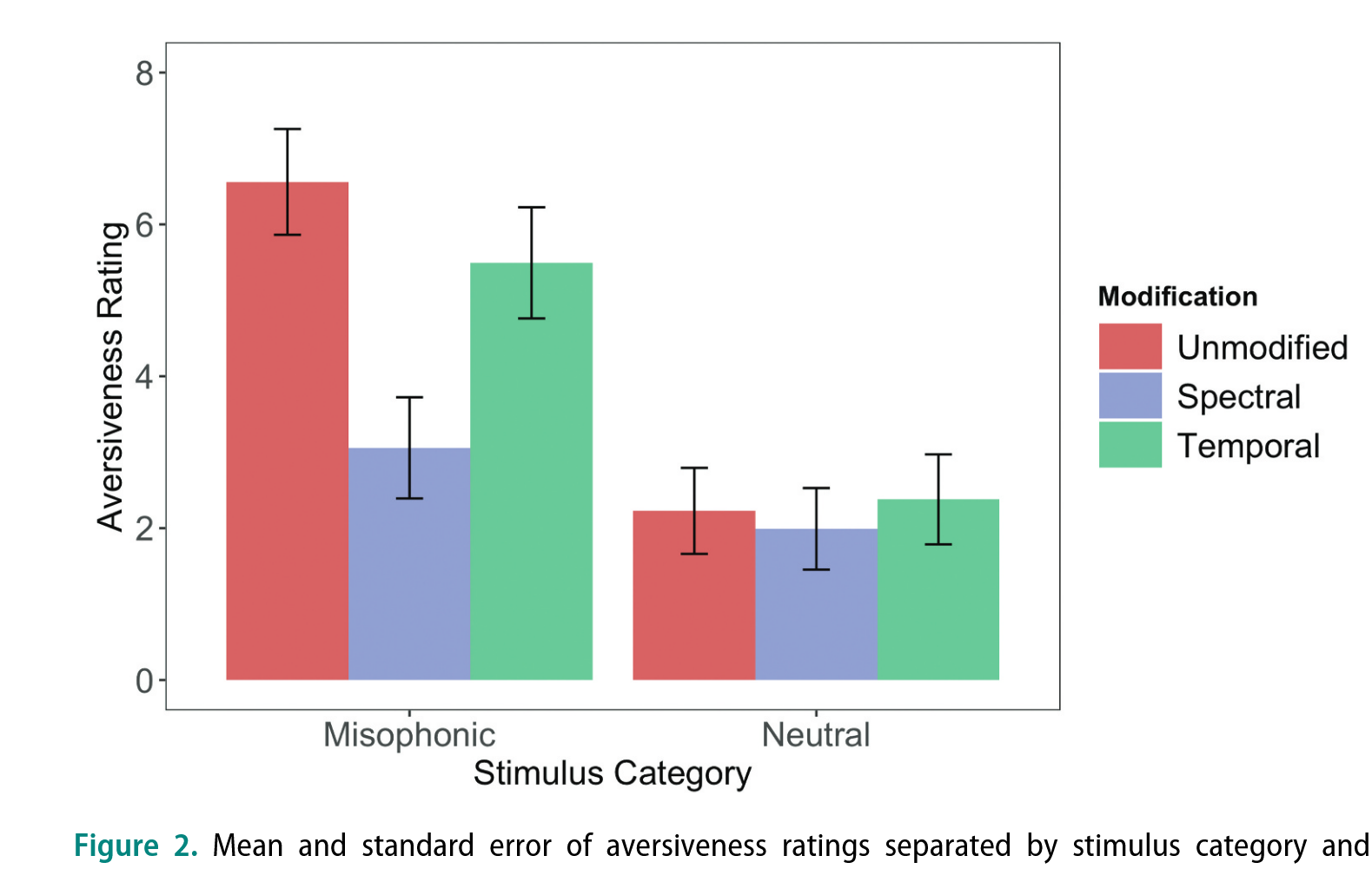
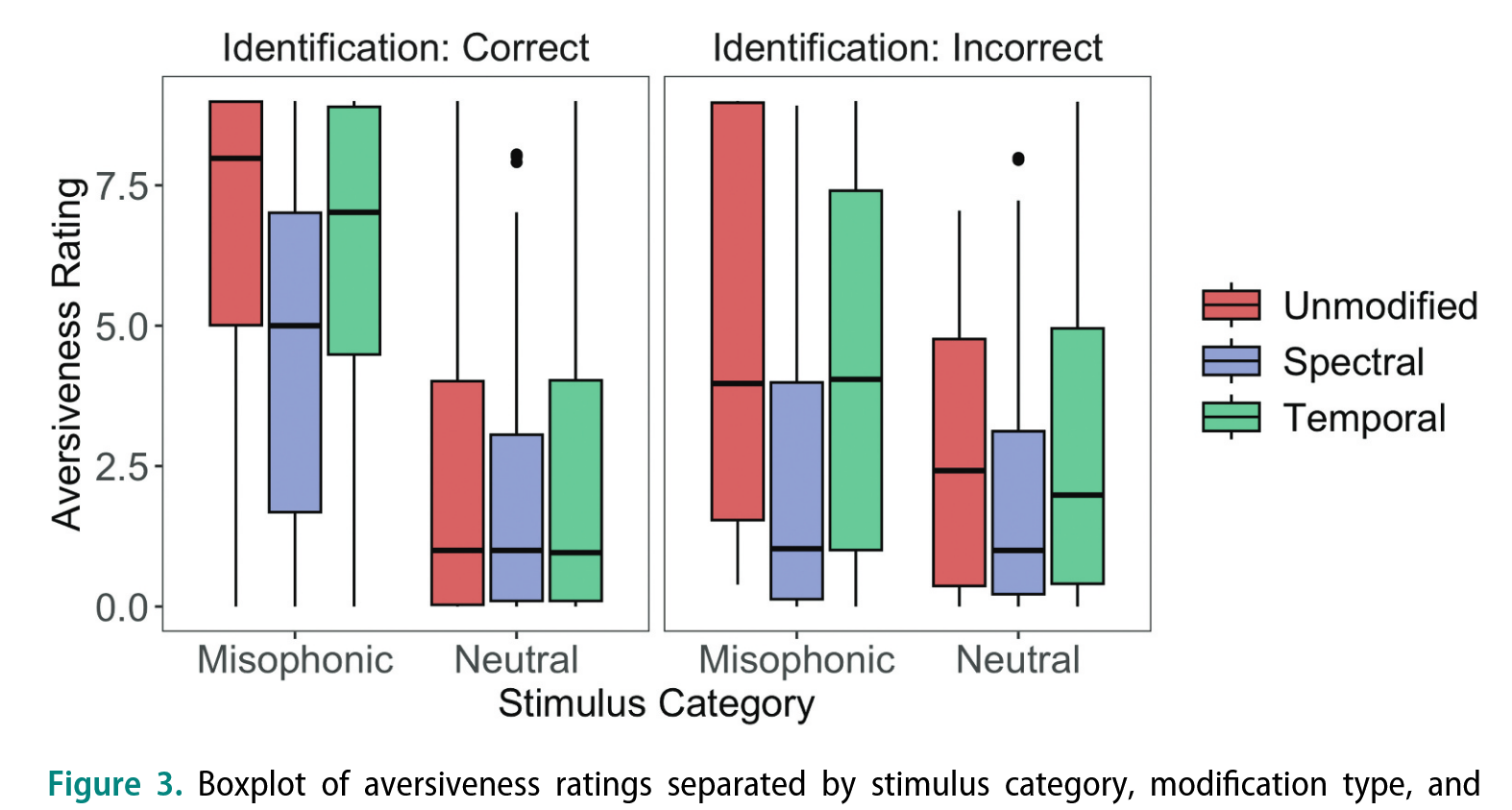
Spectral modification and source misidentification each reduced trigger aversiveness (most so in combination), pointing to spectral cues and source recognition as central to misophonia.
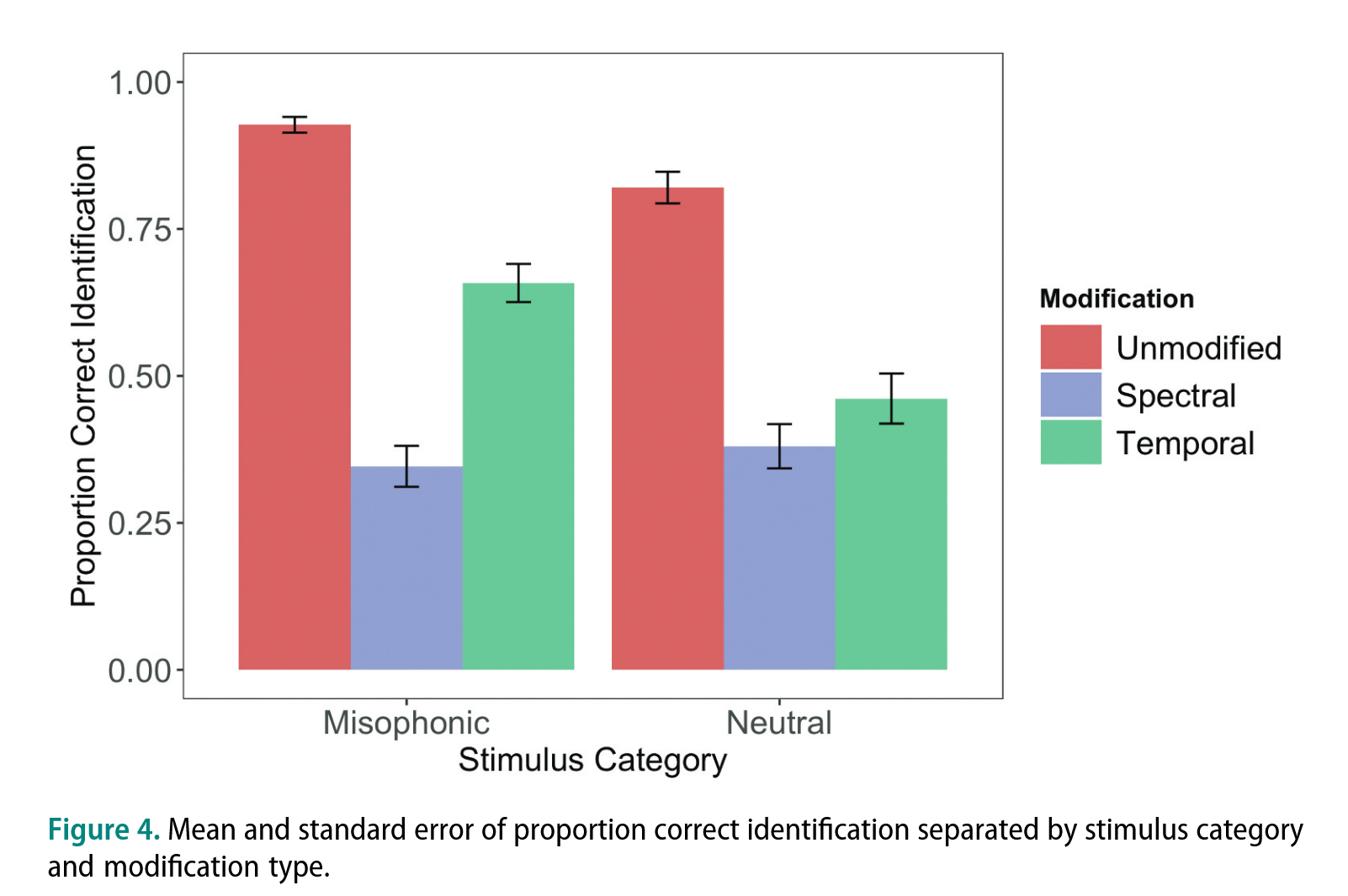
in a 2024 paper looking at the impact spectral and temporal modification of trigger and neutrals sounds impacts aversiveness, the authors found that spectral modification significantly reduced aversiveness of trigger sounds compared to temporally modified and unmodified sounds. additionally, when subjects mis-identified a sound source (indicated by trial level probes presenting possible source labels), aversiveness also decreased, with this effect most pronounced with the spectrally modified sounds ( i.e. correct sim identification had the biggest impact on the spectrally modified sounds). from this the authors concluded that spectral information and source identification both paly a major role in Misophonia. (Kazazis et al., 2024)
relevant figures